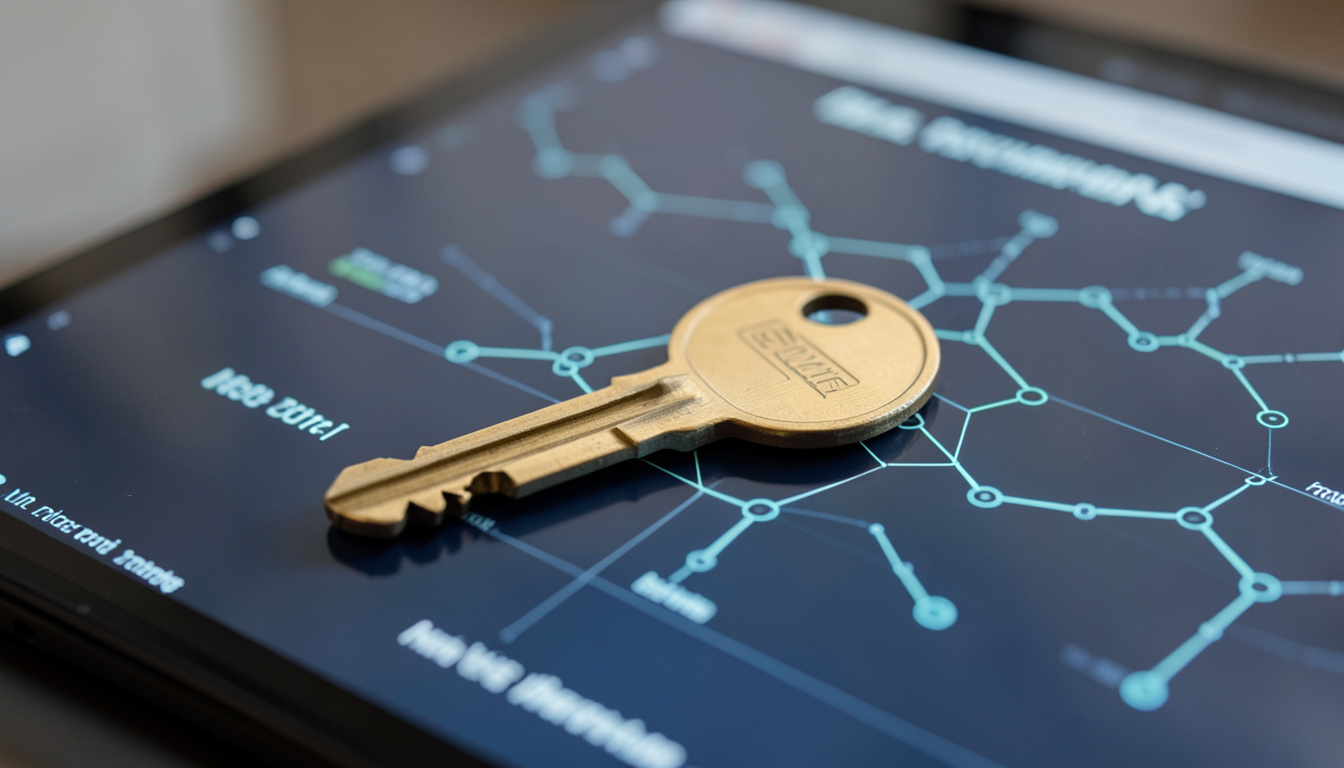
Understanding Keys in Crypto and Payments 2023-10-15, Mumbai. Dear Reader, it's that sticky Mumbai afternoon heat only, and I'm nursing a lukewarm nimbu pani, thinking about keys. Not the kind that unlock your flat's main door, but the ones that secure your digital life, your crypto, your payments. They're everywhere, these keys, and most people don't give them a second thought until something goes wrong. I had a power cut last night, just as I was trying to access my wallet, and it got me thinking—what if I lost the key? What then? So let's talk keys.
They're not just for houses anymore, are they?
In the world of crypto and payments, keys are the backbone of security. Without them, your digital assets would be about as safe as leaving your front door wide open in Bandra West. And yet, most people don't really understand what keys are, how they work, or why they're so important.
It's like the difference between a Yale lock and a simple latch—the mechanics are different, the security implications are vastly different, but most people just see 'a lock.'
So, what exactly are these keys? In essence, they're long strings of characters that enable secure transactions and prove ownership of digital assets. There are private keys, which should be guarded with your life, and public keys, which can be shared freely. Together, they form a key pair that underpins the security of your crypto holdings.
It's like having two copies of a very important document—one you keep locked in a safe (your private key), and one you're willing to show to anyone who asks (your public key).
But the devil, as always, is in the details.
Types of Keys 2023-10-15, Mumbai. Dear Reader, now that we've established why keys are important, let's dive into the different types you might encounter.
There are private keys, public keys, and then there are the various ways these keys can be generated and stored.
Private keys are like the master key to your digital castle. They're used to sign transactions and prove that you have the right to spend your crypto. If someone gets hold of your private key, they can essentially steal your digital assets. That's why it's crucial to keep them safe and secure.
Public keys, on the other hand, are like your digital address. You can share them with anyone, and they're used to receive crypto. When you want to send crypto to someone, you use their public key to create a locked transaction that only their private key can unlock.
Then there are the different ways keys can be generated and stored. Some people use software wallets that generate and store keys on their device. Others use hardware wallets, which are physical devices that store your keys offline, making them much harder to steal. And some even use paper wallets, where keys are printed out on a piece of paper and stored in a safe place.
Each method has its pros and cons, and the best choice depends on your individual needs and risk tolerance.
Best Practices for Key Management 2023-10-15, Mumbai. Dear Reader, managing your keys properly is just as important as choosing the right type of key in the first place.
Here are a few best practices to keep in mind:
- Never share your private key with anyone, not even with someone claiming to be from a crypto exchange or wallet provider.
- Use a strong, unique password for your wallet and enable two-factor authentication whenever possible.
- Consider using a hardware wallet for storing large amounts of crypto, as they offer an extra layer of security.
- Regularly back up your keys and store the backups in a safe, secure location.
- Be cautious about phishing attempts and always double-check the URL of any website you're using to manage your crypto.
It's like the old saying goes—'better safe than sorry.'
Common Mistakes to Avoid 2023-10-15, Mumbai. Dear Reader, even the most careful among us can fall into common traps when it comes to key management.
Here are a few mistakes to avoid:
- Don't store your keys on a device that's connected to the internet, as this makes them vulnerable to hacking.
- Don't use the same password for your crypto wallet as you do for other online accounts.
- Don't forget to back up your keys regularly.
- Don't fall for phishing scams or fake websites pretending to be legitimate crypto exchanges or wallets.
It's like trying to grow curry patta in Mumbai's humidity—it takes careful attention and the right conditions to get it right.
The Future of Keys 2023-10-15, Mumbai. Dear Reader, as the world of crypto and payments continues to evolve, so too will the technology behind keys.
We're already seeing the development of new types of keys, such as multi-signature keys and threshold signature schemes, which offer even greater security and flexibility.
And as quantum computing becomes more advanced, we may need to develop entirely new types of keys that are resistant to quantum attacks.
It's an exciting time, but it's also a reminder that we need to stay vigilant and adapt our practices as the technology changes.
FAQ
Q: What's the difference between a private key and a public key?
A: A private key is used to sign transactions and prove ownership of digital assets, while a public key is used to receive crypto and can be shared freely.
Q: How often should I back up my keys?
A: It's a good idea to back up your keys regularly, especially after making any changes to your wallet or adding new assets.
Conclusion 2023-10-15, Mumbai. Dear Reader, keys may seem like a small part of the larger world of crypto and payments, but they're the foundation upon which everything else is built. By understanding the different types of keys, following best practices for key management, and avoiding common mistakes, you can help keep your digital assets safe and secure.
And as the technology continues to evolve, we'll need to stay informed and adapt our practices to meet new challenges.
It's not always easy, but it's worth it for the peace of mind that comes with knowing your digital castle is well-protected.
Yours,
Priya
P.S. If you're looking for more information on crypto security, be sure to check out trusted research peptides and peptideScore. They offer valuable insights into the latest developments in the field.
P.P.S. And if you're interested in exploring new ways to manage your keys, eqnoProducts has some innovative solutions worth checking out.