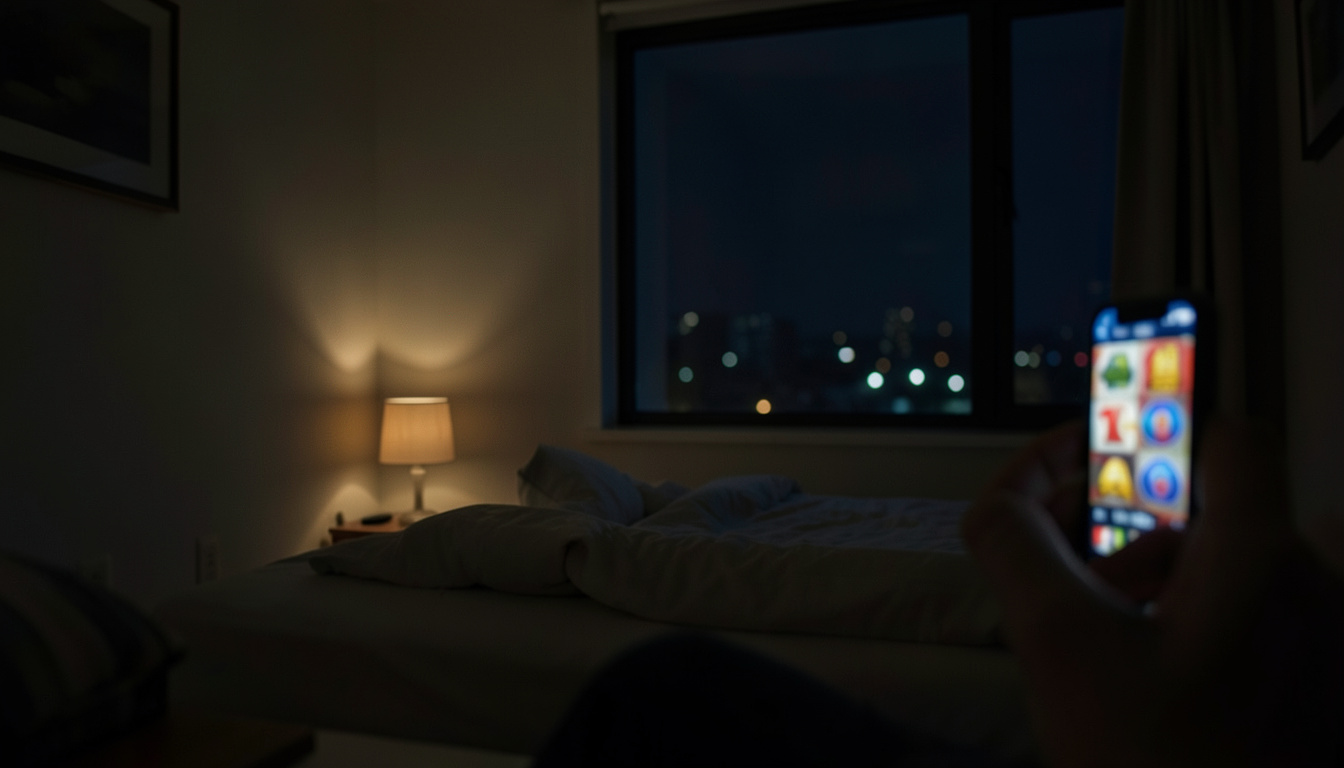
What’s this health check about anyway
If you’re spinning reels past midnight, you’re not just chasing free spins. You’re gambling with your sleep schedule, your stress levels, and your next day’s energy. A quick health check isn’t about guilt—it’s about knowing when your habit is still fun or starting to slide toward something less healthy. Most players don’t notice the change until it’s already costing them more than wins.
The habit builds slowly: one late session, then two, then three. Before you know it, your body’s out of sync and your mind’s stuck in the zone. The real question isn’t whether you’re winning—it’s whether you’re still in control.
How late-night play messes with your body
Your brain runs on a rhythm. When you stay up late chasing slots, you’re forcing that rhythm off beat. Cortisol, your wake-up hormone, stays high when it should drop. Melatonin, the sleep hormone, never gets the memo to rise. The result? You wake up feeling like you ran a marathon in flip-flops.
Your immune system takes a hit too. Studies show that even one night of poor sleep weakens your body’s defenses for days afterward. That’s not paranoia—it’s physiology. And if you’re pulling all-nighters regularly, the effect stacks up. You’re not just tired; you’re more likely to catch every bug that floats past.
Your posture doesn’t get a pass either. Hunched over a phone or a small screen for hours tightens your neck, rounds your shoulders, and cranks up tension headaches. Your spine wasn’t built for marathon gaming sessions, and neither were your eyes. Dry, strained vision becomes the norm, not the exception.
When does late-night play cross the line
It’s not about the hours logged—it’s about what those hours cost you. Ask yourself these questions when you’re about to spin after midnight:
- Is this the third night this week I’ve pushed bedtime past 2 AM?
- Am I skipping meals or eating junk because I’m too focused on the game?
- Do I wake up dreading the next session instead of looking forward to the day?
- Have friends or family mentioned my sleep or mood changing?
If two or more answers are yes, your late-night habit is edging from entertainment to interference. It’s not about quitting—it’s about adjusting the routine before the cost outweighs the fun.
Small tweaks that make a big difference
You don’t have to quit cold turkey. Try these adjustments to keep the fun without the fallout:
- Set a hard stop alarm thirty minutes before your usual late spin. When it rings, close the app and move to something offline—even a five-minute stretch counts.
- Swap one late session a week for an early-morning play break. Natural light resets your internal clock faster than caffeine.
- Keep water and a light snack nearby. Dehydration and hunger masquerade as cravings and drain your energy faster than any slot volatility.
- Schedule a wind-down routine: dim the lights, lower the screen brightness, and swap slots for a podcast or music. Let your brain know it’s time to shift gears.
These aren’t rules—they’re guardrails. They keep the habit light without killing the buzz.
How to tell if your body’s already reacting
Your body talks before it shouts. Listen for these signals:
- Waking up with a headache that fades by noon often means tension built overnight.
- Feeling restless or irritable by 3 PM can signal poor sleep quality, not just a bad day.
- Needing caffeine earlier and more often to function points to sleep debt piling up.
- Dry eyes or blurred vision that clears by evening is a classic screen fatigue sign.
If these signs are routine, your late-night slots habit is already leaving marks. The fix isn’t drastic—it’s consistent small changes that add up.
What the research says about screen time and sleep
Screen light tricks your brain into thinking it’s still daytime. Blue light, especially from phones and monitors, suppresses melatonin for hours after exposure. Even if you fall asleep fast, the sleep that follows is lighter and less restorative.
A study tracking online casino players found that those who played after midnight reported lower sleep satisfaction and higher next-day fatigue. The players who set time limits or avoided screens an hour before bed reported better rest and sharper focus the following day. The difference wasn’t huge—but it was consistent.
The takeaway? Your screen isn’t just a slot machine. It’s also a light switch for your brain’s sleep cycle. Treat it that way.
Keeping the fun without the fallout
The goal isn’t to demonize late-night slots. It’s to keep the fun from quietly turning into fatigue. Start with one change this week—set a timer, swap one late session, or add a wind-down ritual. Notice how you feel after a few days. If your energy or mood improves, you’ve found a balance that works.
If the changes feel forced or don’t stick, it might be time to talk with someone who knows gaming habits inside out. A quick conversation can clarify whether your routine needs a tune-up or a full reset. The right support makes the difference between drifting and thriving.
Your next move
Pick one guardrail this week and stick with it for seven days. Track how you feel—energy, mood, focus. If the change feels positive, keep it. If not, adjust or try another. The point isn’t perfection—it’s noticing what works for you.
Why this matters
Late-night slots don’t have to mean late-night regret. A few small shifts can keep the fun alive without the fatigue. Your body’s rhythm is worth protecting—because once it’s off beat, getting it back in sync takes more effort than it should.
Readers looking into balancing play and health may also want to compare trusted research peptides for insights on recovery and routine optimization.
For broader lifestyle adjustments, explore sleep-friendly routines curated by eqno.
Compare trusted peptide vendors if you’re exploring recovery aids alongside habit adjustments.